

Learning Without the Screen
As screen fatigue rises, a more human model of education is beginning to emerge

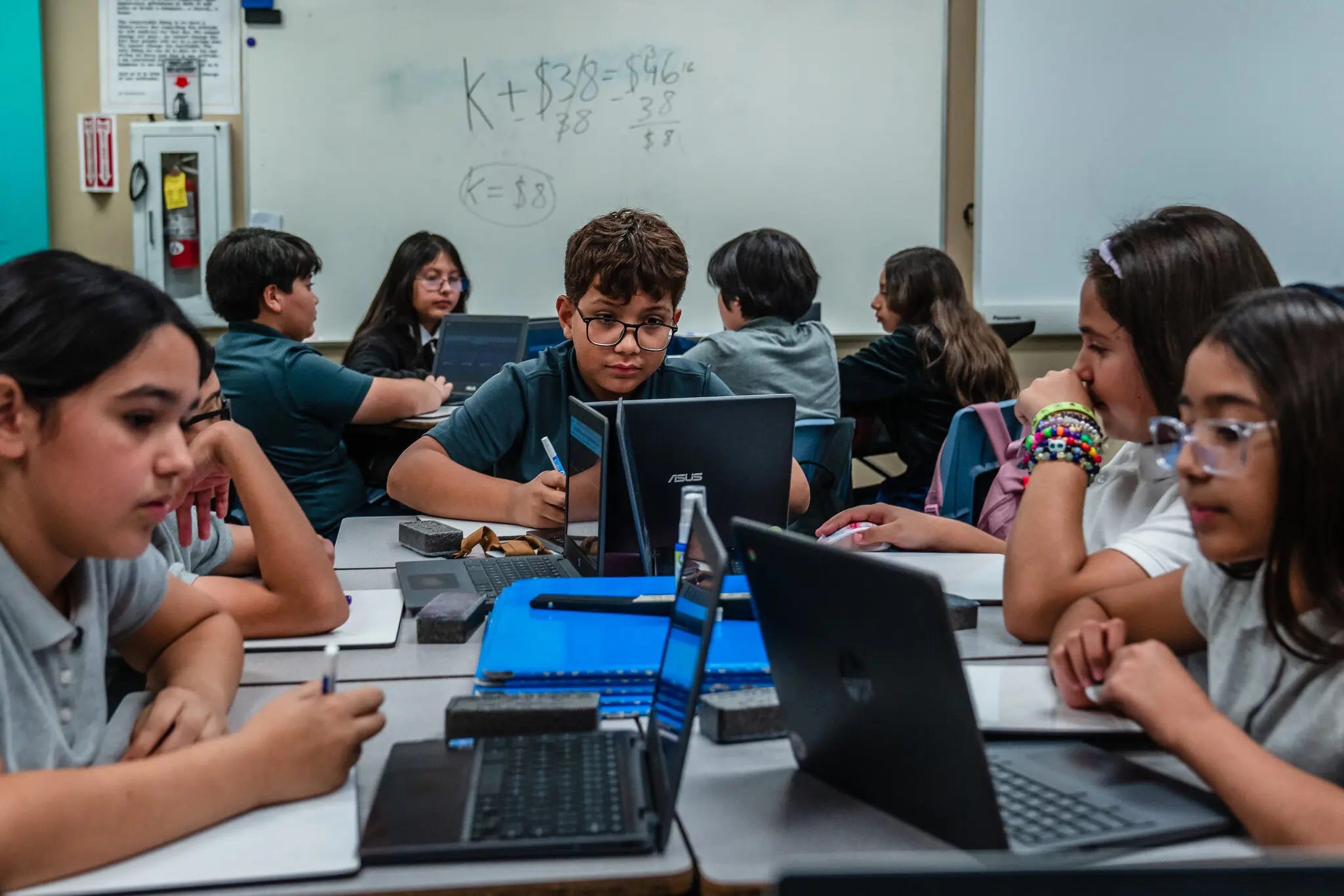
School-issued laptops and iPads have been a cornerstone of many middle school and high school educations for nearly a decade. But after decades of trending toward increased technology usage ( and AI integration as of late) - parents are pushing back. So much so, our team is seeing signals of a potential slow down or even reversal of this upward trajectory.
The Los Angeles Unified School District board (the 3rd largest school district in the US) just voted in favor of screen time limits at school; and this isn’t just a limit on personal phone usage. It’s a complete reimagining of the district’s approach to how and when technology devices will be used for educational content delivery and assessment.
This movement started with a group of concerned parents and teachers forming “Schools Beyond Screens“, advocating for a reduction of reliance on screens at both school and home. The voices of real parents and teachers with real concerns about their students helped drive the LAUSD school board to vote in favor of the demands made by Schools Beyond Screens. Among other changes, they plan to create a screen time policy for each grade and completely prohibit the use of devices in first grade students and younger. In addition to new policies for every student, they’re even offering parents the opportunity to completely opt their children out of any device use at school.
This isn’t just a shift in California; similar examples are emerging in school districts across the country. Sixteen other states have proposed legislation for varying levels of screen time use in schools and three other smaller school districts (Beverly Hills, California; Bend, Oregon; and Burke County, North Carolina) have already adopted similar policies. The geographic spread signals that this is no longer a local conversation.
The Los Angeles parent’s slogans “Teachers Over Tech” and “Relationships=Results” come at a time when speculation around a K-12 future powered by AI and individualized self-guided lessons (i.e., a heavy focus on screen usage) are also on the rise. The contrast between parent wishes and industry speculation couldn’t be starker.
Precedents are being set, which could empower more parents and teachers to advocate for a version of these policies in their own school districts. A Pew Research Study found that 86% of U.S. parents with a child age 5 to 11 limit their child’s screen time and 66% stated parenting is harder than it used to be due to increased technology usage – another signal this movement could be on track to accelerate and spread. It’s no longer just a shared sentiment of concern - parents have a model to follow.
Potential Future Implications:
Pen and Paper Renaissance: Parents and teachers are increasingly linking screens to declining academic performance, behavioral problems, and emotional instability. The response may be straightforward: ditch the devices and go back to pen and paper, regardless of a school’s zip code or financial means to provide the latest tech.
Leveling the Field: School iPads and computers were supposed to level the playing field, but subscription tools like Chegg and ChatGPT are creating a new divide between students who can afford AI and those who can’t. Reducing the opportunities to “Just Chat It” could level the playing field more than school-provided iPads and laptops ever did.
AI Education without the Screen: The future of AI in K-12 education doesn’t have to be a student alone with a tablet. AI-powered, individualized lessons could still exist, but be administered more creatively and experientially, guided by a professional educator with expertise in instructional delivery. Students get personalized learning and social interaction while teachers keep building meaningful relationships with students.
Key Data Considerations:
How LA is Rethinking Screens in the Classroom: Check out this NBC News report on the Los Angeles Unified School District’s new screen time policy; the latest and largest school district, to take action on limiting device use in schools. (Source: NBC News)
Parenting in the Age of Screens: Check out this Pew Research study on the effect of screens on kids and parents that found 86% of parents with children ages 5 to 11 limit their child’s screen time and 66% of parents say parenting is harder today than it was 20 years ago, with many pointing to technology as a key reason why. (Source: Pew Research)